Religion in Aynca
The Primary Faiths
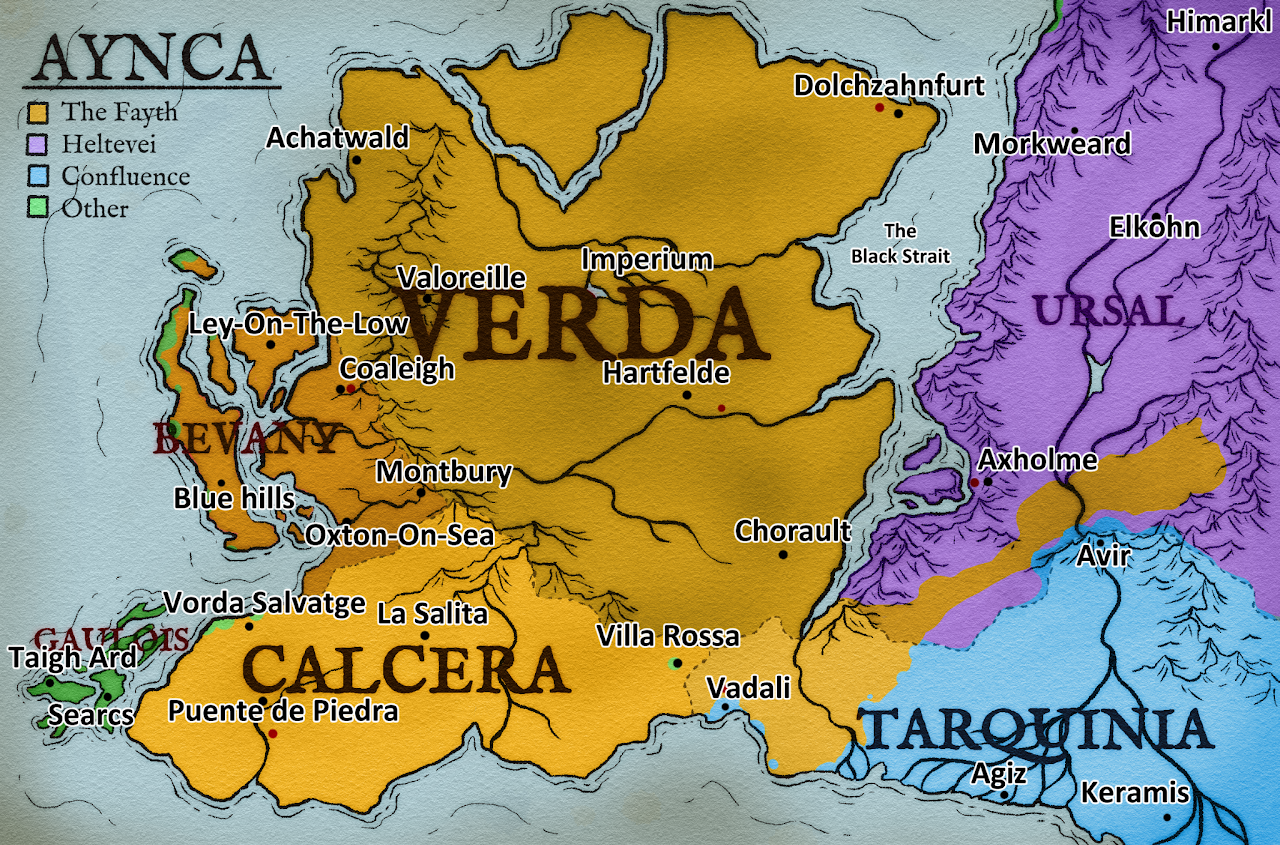
There are three major religions throughout Aynca, alongside pockets of "other" more folk-style religions in rural areas away from the major religious powerhouses. In order of influence:

I. The Fayth
The dominant religion of the Verda Empire, Bevany, Calcera, western Tarquinia and southern Ursal.

II. Heltevei
Followed in the colder north of Ursal, an evolution of early paganism.
III. Confluence
The primary religion of Tarquinia, rooted in the rivers and The Flow.
While each of the three main religions have varying doctrines and views on the world, all draw on three core pillars:
Map of Religious Influence
Priests and Witches
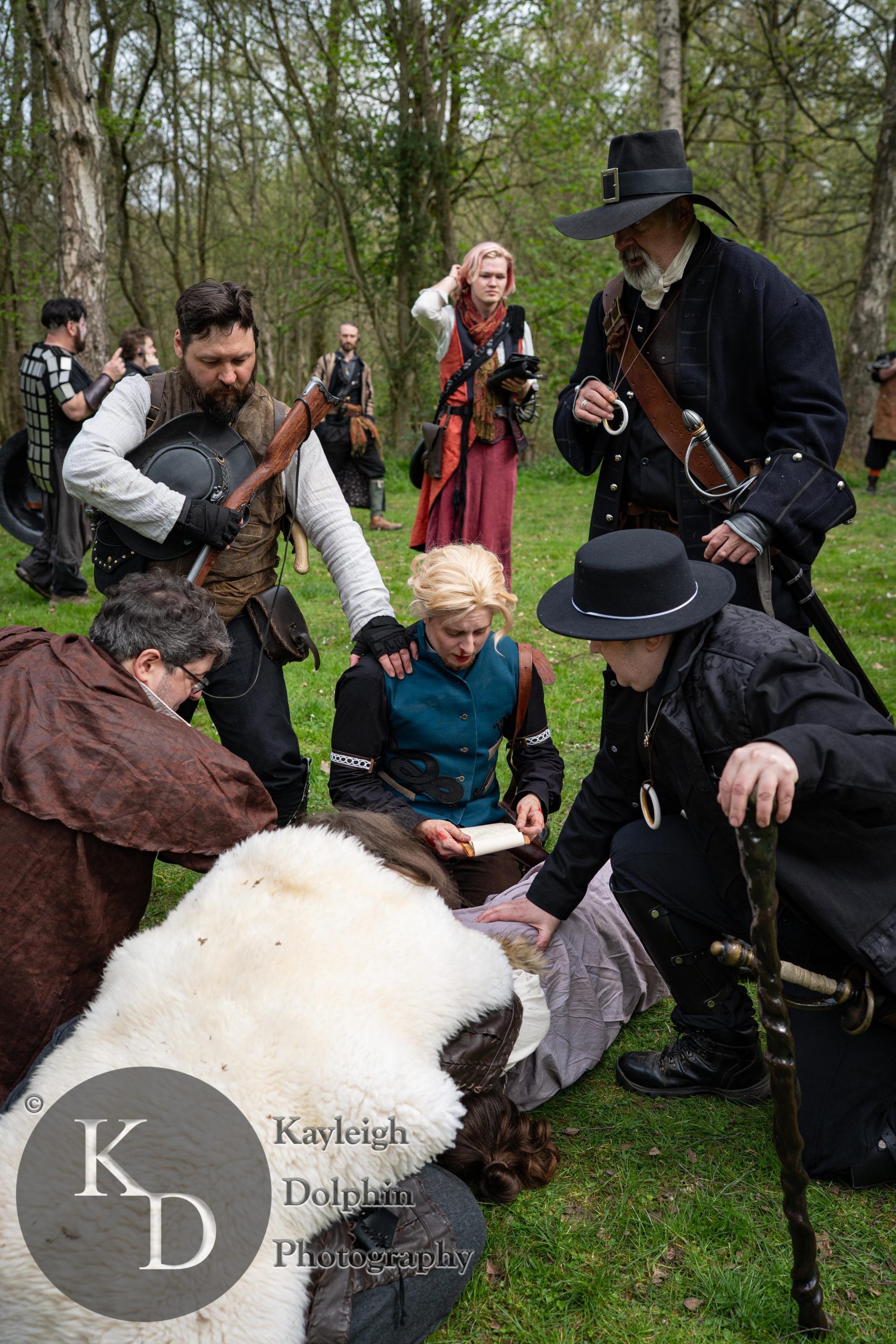
Where Priests walk the path of salvation, Witches choose the path of damnation.
There is nothing that better illustrates the dichotomy of Good and Evil than Priests and Witches, and the consequences of tethering one's soul to either the Mortal or Demonic Plane of existence.
Through servitude and devotion to Aynca's religious paths, Priests channel the powers of Good -- manifesting as blessings, sanctification and consecration. A lifelong pledge to Good and an acceptance of Mortality, to eradicate Evil in all its forms.
Conversely, by desiring power beyond mortal means, a Witch makes a pact with a Demon - forsaking their connection to Mortality and embracing Evil in its truest form. This pact grants magic, for the destruction of all that is Good.
Scholars generally accept that Witches and Priests are two sides of the same coin - which also explains why a Witch cannot wield Good as a Priest can, nor a Priest wield Evil as a Witch can. Of course, there are exceptions on both sides: Priests who use piety as a means of controlling their flock, and Witches who see the error of their ways and sever their link to Evil.
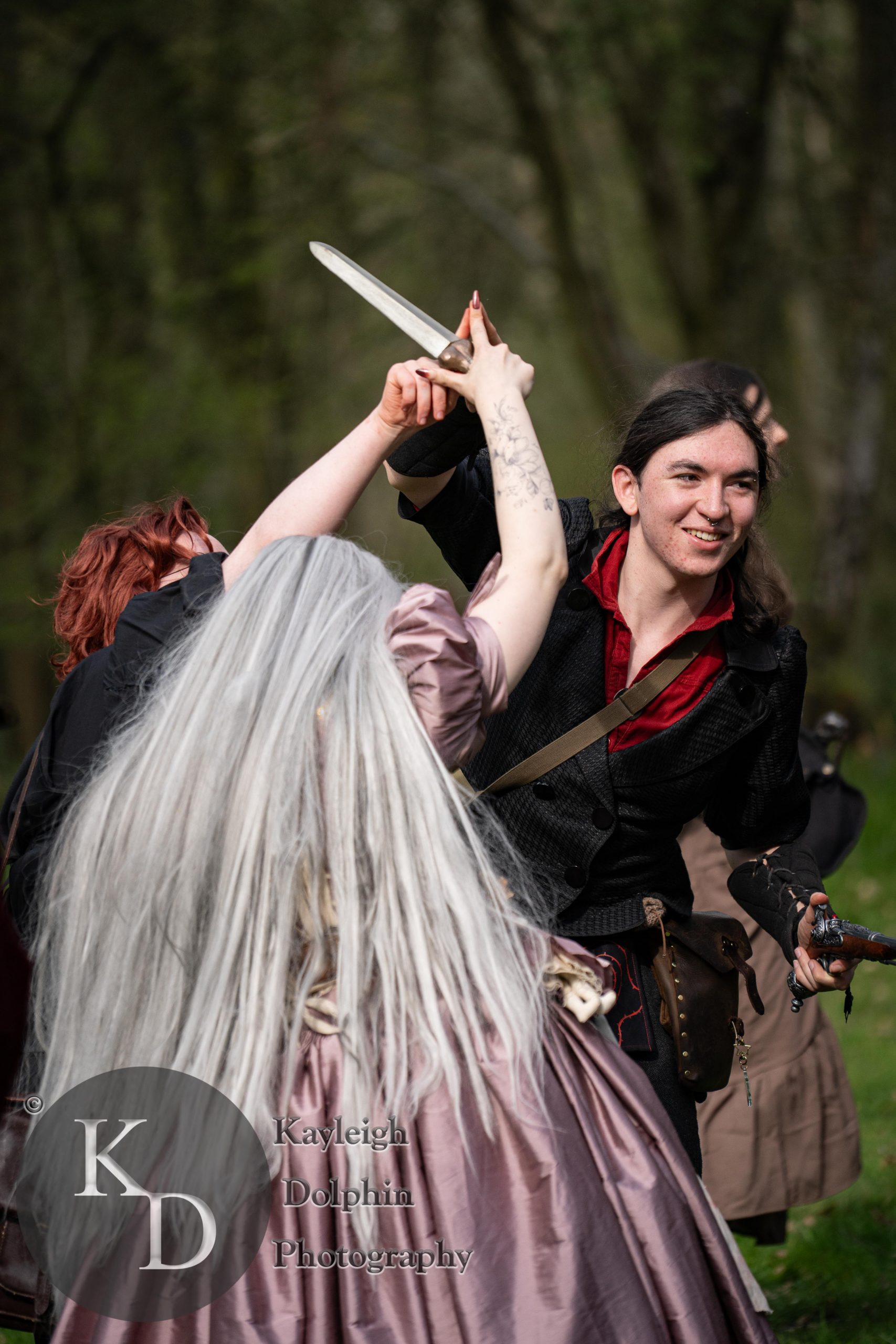
Witches
Any Witch wishing to redeem themselves must first find a way to free themselves of the unholy bond they made to a Demon. Names are power, as such the majority of Witches don't know the true name of the Demon they've bonded with - meaning that they are entirely at its mercy. They must trick, trap, or learn and use their Demon's true name; killing a demon cuts off all access to their magic, leaving a Witch utterly powerless.
However, escaping a pact strips a Witch of much of their prior power, though they retain the wisps - bending this remnant of Evil to their own free will at last.
When Witches were lost to the shadows, what they did was truly Evil. Their soul was severed from the light and will never fully find it again, though many reformed Witches do what they can to atone. This atonement is personal, not spiritual; there is no afterlife for a Witch, no matter the good they later achieve. They remain stained by a choice made long ago, and some will never be forgiven - both because trust is hard to rebuild, and because many carry first-hand trauma from a Witch's cruelty.
Many Witches still retain their faith, but no God responds to their prayers.
Priests
Priests sit diametrically opposed to Witches on the spectrum of Good and Evil. Where a Witch gives their life to darkness, a Priest gives theirs to light.
The Fayth is Aynca's most widespread religion, but Priests aren't limited to it alone - Heltevei and Confluence have their own priests, just as devoted to their teachings, even where practices differ. Gaulois holds its own spiritual practices entirely, invoking gods heard nowhere else on the continent.
Priests walk a path of enlightenment, spirituality and Good - strong but kind, paladins and beacons of faith against an encroaching darkness. Where magic is visual and overt, faith is demonstrated through resilience in the face of Evil, acts of grace, and calm under pressure. A Priest might not conjure flames or bend the wind, but they can mend the broken, soothe a tormented soul, or banish corruption with prayer.
Their methods are less flashy than a Witch's, but always laden with meaning - a reminder of hope, mercy, and the enduring strength of God.